Canyon Strategy: The Tactical Brilliance of Gaze and Schwarzbauer
The Unlikely Alchemists: How Gaze and Schwarzbauer Decoded the Cape Epic
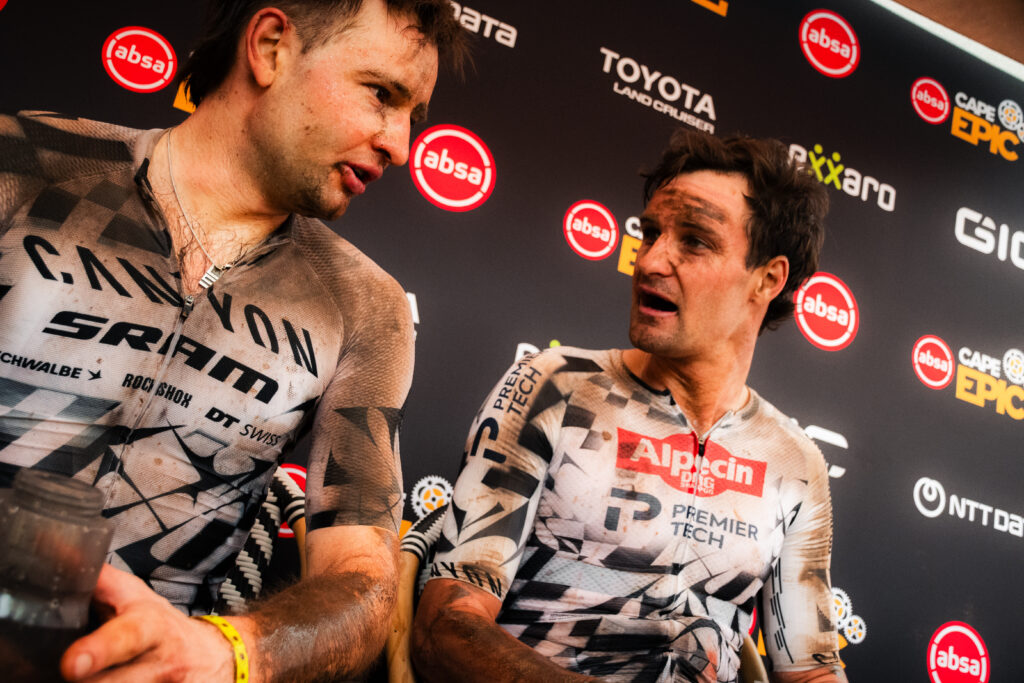
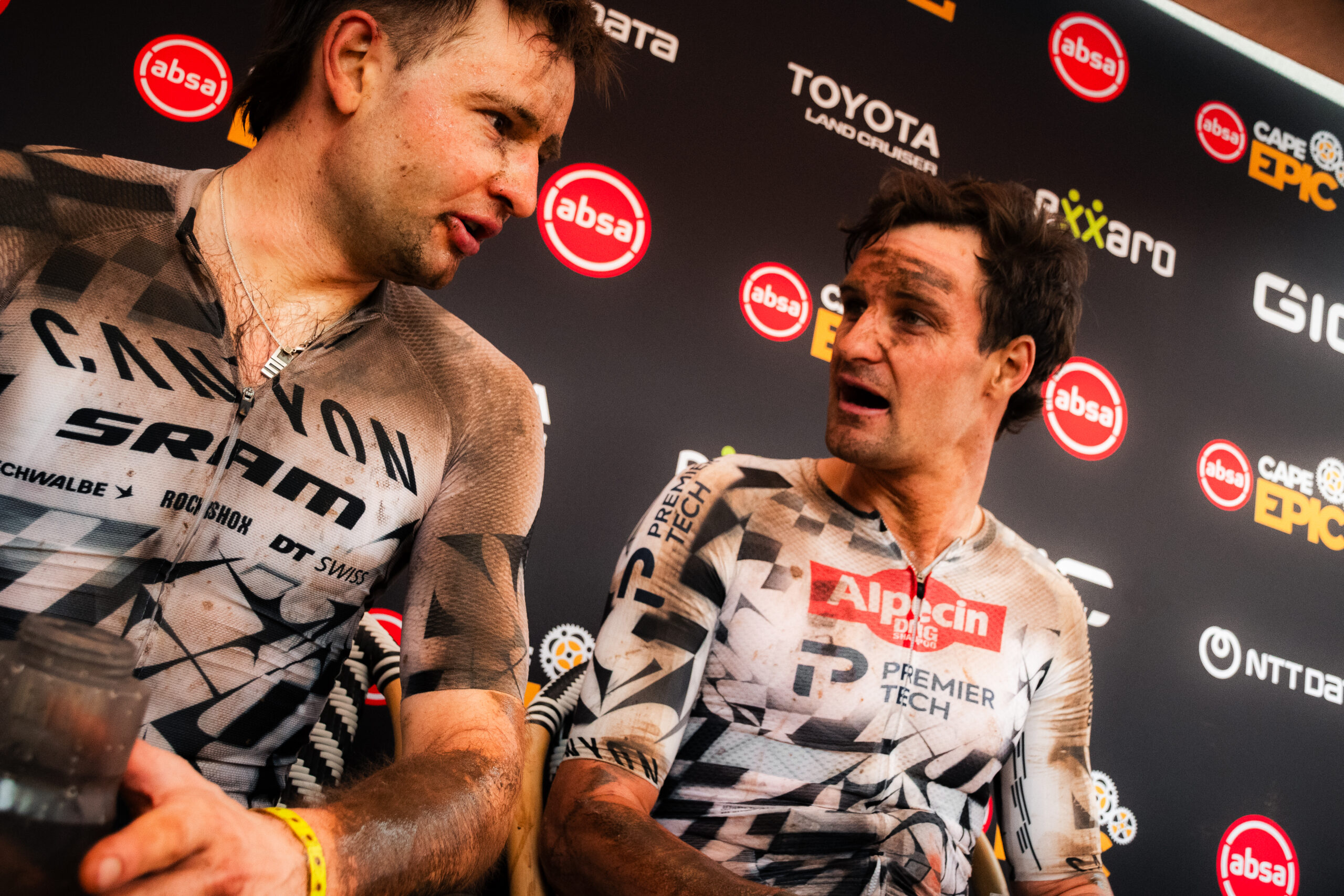
The Absa Cape Epic is not merely a mountain bike race; it is a chaotic, beautiful, and often cruel test of human fortitude. It breaks world champions, shatters dreams, and turns partnerships into battlegrounds. So, when Canyon announced that two-time XCO Short Track World Champion Sam Gaze would be paired with Germany’s powerful XCO specialist Luca Schwarzbauer for the 2026 edition, the reaction was a blend of fascination and skepticism.
This was not a pairing built on the traditional Cape Epic blueprint of two seasoned marathon specialists with endless diesel engines. This was something different. This was the intersection of raw, explosive World Cup speed and the relative unknown of an Epic rookie. It was an experiment. And by the end of their first week together in the dusty trails of the Western Cape, they hadn’t just survived; they had provided some of the most electric moments in recent race history, claiming two emphatic stage victories that redefined the script of what makes a successful Cape Epic team.
For Gaze, the Epic was a return to familiar, albeit painful, territory. His history with the race included heartbreaking mechanicals and the searing pain of abandonment. He knew the beast. But for Schwarzbauer, this was terra incognita. He arrived as a rookie, a specialist in the 20-minute pain cave of Short Track racing, thrust into eight consecutive days of four-hour-plus marathons.
The fascinating dynamic of this team lay in their contrasting yet complementary physical arsenals. Both are XCO riders, possessing that “extreme power” necessary to punch up technical climbs and animate races. But Gaze is also a road professional, a factor that cannot be overstated. He understands the art of the long-range effort, the fuel management required for six-hour stages, and the relentless pacing required on draggy gravel roads. Schwarzbauer, however, is a physical specimen of explosive energy, described colorfully by competitors as having “the FTP of a tractor.” His power isn’t just high; it’s devastatingly abrupt, perfect for gapping rivals on steep gradients but untested over a grueling, multi-day endurance event.
The question wasn’t if they had the power, but if they had the synergy—the patience, the empathy, and the maturity to manage each other through the inevitable low points that the Epic guarantees. They answered that question in definitive fashion, not with words, but with actions that showcased a partnership defined by resilience.
Their first taste of glory came on Stage 2, a 102km loop starting and finishing in Montagu. The course was front-loaded with climbing, suggesting a day for the lightweight, pure climbers. But as the race wound into its final 25km, the nature of the terrain shifted. The jagged peaks gave way to more rolling, undulating hills, and the powerful XC specialists began to loom over the front group.
It was here that the chemistry of “Team Powerhouse” ignited. Recognizing the terrain suited their strengths, they unleashed a masterclass in tactical aggression. They used their explosive accelerations to split the front group of seven teams, animating every attack. As they rounded the final corner, only the Wilier-Vittoria pairing of Luca Braidot and Simone Avondetto could remain in contact. A desperate, lung-searing sprint ensued. The final milliseconds of the three-hour and fifty-four-minute stage were decided by pure power—XC power. Schwarzbauer, dug deeper than perhaps ever before, his massive engine roaring as he propelled his bike forward, crossing the line just half a second ahead of Braidot, with Gaze right on his wheel. The stage win moved them from ninth on GC to sixth, but more importantly, it was the moment they verified their method. They didn’t have to wait for the final kilometer; they could break the race when they decided the terrain was right.
If Stage 2 was about offensive power, Stage 4 was a masterclass in defensive resilience and trust. The shorter 87km stage around Greyton promised tactical drama, but the Canyon team received a punch in the gut early on: a puncture. In a race where every second counts, a flat can feel like a terminal diagnosis. While their rivals sped away, Gaze and Schwarzbauer were stationary, fumbling with plugs and plugs, their dreams of a podium slipping away with every escaping molecule of air. They had to stop three times to fix the leak.
This is where lesser teams dissolve into recrimination and panic. But the Canyon duo chose management over panic. Gaze would later explain their strategy was built on absolute trust. “When your teammate has the FTP of a tractor, you know you can come back,” he noted, an insight into the confidence they had in each other’s unique strengths. They didn’t rush the comeback; they measured it. They used the transition sections of the course, trusting that on the final, brutal climb—the infamous UFO climb—their power would allow them to reconnect.
The plan was executed flawlessly. As the front of the race fractured on the loose, rocky ascent, the Canyon pair steadily clawed their way back, connecting with the leading two teams just before the summit. As they hit the final, dusty descent, disaster struck the race again: a massive crash in the leading group involving the Buff-BH team. The Canyon duo navigated the chaos with surgical precision, seizing the leading position. They sprinted for the finish line once more, with Schwarzbauer crossing the line first by just half a second over the tireless Wilier-Vittoria team. The result was more than just another victory; it was an epic comeback that vaulted them into third place on the general classification and confirmed that their partnership was forged from something more durable than just carbon fiber and watts.
The performances of Sam Gaze and Luca Schwarzbauer at their first combined Cape Epic will be remembered not just for the statistical brilliance of two stage wins, but for the way they achieved them. They brought the electric, impulsive energy of World Cup XC racing to the desert, breaking the marathon monotony with explosive tactical chess moves. They showed that power, when managed with patience and deployed with trust, can triumph over terrain that traditional wisdom dictates should be hostile to the sprinter. By the end of the week, the rookie and the veteran road pro had found a new form of alchemy, creating a partnership that wasn’t just fast—it was fantastically entertaining, undeniably powerful, and, in every sense of the word, epic.