
How Gaze and Schwarzbauer Mastered the Ouberg Pass at Cape Epic
Stage 2 as Cape Epic Men’s GC Shrinks to 1.6 Seconds
The Absa Cape Epic is often heralded as the “Tour de France of mountain biking,” but even that lofty comparison sometimes fails to capture the sheer, gritty unpredictability of racing in the Western Cape. On Stage 2 of the 2026 edition, that unpredictability was on full display. After 102 kilometers of brutal terrain and a relentless 2,250 meters of vertical gain, the Men’s Elite race has been distilled down to a margin so small it’s practically invisible: a mere 1.6 seconds separates the top two teams on the General Classification.
For the fans lining the route in Montagu, it was a display of tactical brilliance. For the riders, it was a “brutal” day of humidity, dust, and “sharky rocks” that threatened to end podium hopes at every turn.
Into the Klein Karoo: The Course Breakdown
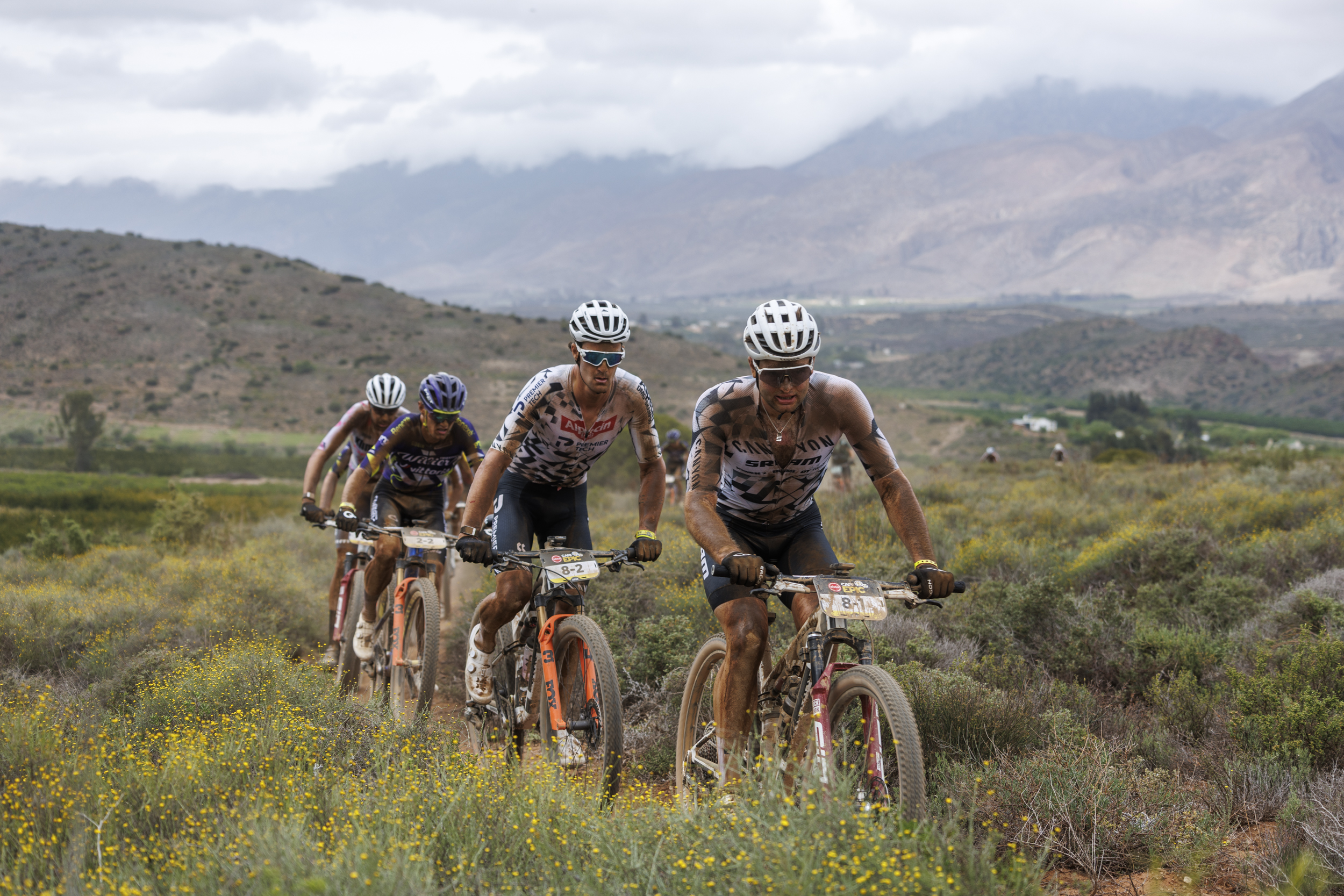
Stage 2 was billed as a 4/5 for difficulty, and it earned every bit of that rating. Leaving the oasis of Montagu, the riders were thrust immediately into the semi-arid wilderness of the Klein Karoo. The centerpiece of the day was the Ouberg Pass—a relentless 15-kilometer climb that began almost immediately after the neutral zone.
The initial 35 kilometers were essentially a continuous uphill grind, testing the aerobic capacity of every athlete in the field. But the Ouberg wasn’t just about the legs; it was about the eyes. As the sun beat down on the parched earth, massive dust clouds rose from the lead group, dropping visibility to near zero. In these conditions, hitting a “sharky” rock—those jagged, buried limestone edges common to the Karoo—isn’t a matter of if, but when.
The Canyon Masterstroke: Gaze and Schwarzbauer’s Tactical Gamble
While much of the pre-race talk centered on the climbing prowess of the pure marathon specialists, it was the powerhouse duo of Sam Gaze (NZL) and Luca Schwarzbauer (GER) of Team Canyon who dictated the narrative of Stage 2. Following a frustrating opening stage where they struggled to find their rhythm, the former Marathon World Champion and Short Track specialist came into the day with a “master plan.”
“We tried to control a little bit to delay the climbers from really ripping into it,” Sam Gaze explained after the finish. Their strategy was high-risk: stay at the very front of the race to ensure clean air and a clear view of the technical erosion gullies, even if it meant doing more work in the wind.
Luca Schwarzbauer echoed the sentiment, noting that while the temperature wasn’t “crazy,” the humidity made the efforts feel twice as hard. “Somehow I could recover on the top… the bike had to work a lot today. It was so rough, but being at the front was the secret formula.”
By controlling the pace from the front, Canyon managed to neutralize the pure climbers for the majority of the day, turning the stage into a high-speed game of follow-the-leader where only the strongest could survive the draft.
Drama on the Pass: Punctures and Powerhouse Moves
The Ouberg Pass claimed its first major victim early on. Wout Alleman, the Belgian Marathon Champion and Stage 1 winner, suffered a devastating second puncture of the week. Alongside his partner Stosek, Alleman was forced into a frantic repair job while the lead group, spearheaded by Canyon and the Yellow Jersey team, hammered away. The gap opened quickly, and despite a heroic chase, the Stage 1 victors saw their GC hopes take a massive blow.
Meanwhile, the Yellow Jersey leaders—Matt Beers and Tristan Nortje of Toyota Specialized Imbuko—were fighting a different kind of battle. For Beers, a three-time champion, today was about mentorship and management. “It’s gnarly out there,” Beers said, visibly coated in a layer of Karoo silt. “I was just trying to guide Tristan, give him as much info as I could see to warn him about the holes and erosions. The guys were happy with us controlling, so we just had to make it safe.”
The Final 5km: A Sprint for the Ages
As the race entered the final 5 kilometers, the tactical posturing reached a fever pitch. Eight teams were still in contention as they hit the final technical singletrack sections. The pace was frantic. Tristan Nortje, digging deep to protect the lead, began to feel the intensity of the cross-country specialists. Sensing a momentary lull, Beers strategically slowed the pace entering a tight section of singletrack to manage the gap, but it gave Canyon the opening they needed.
Sam Gaze and Luca Schwarzbauer “put the hammer down” in the final stretch. Their explosive power, honed on the UCI World Cup circuit, was too much for the marathon specialists to match in a flat-out sprint. Canyon crossed the line first, securing a massive stage win and signaling their return to the top of the sport.
Just 1.8 seconds behind them, the Italian duo of Luca Braidot and Simone Avondetto (Wilier-Vittoria) secured second place. Beers and Nortje crossed just 2.2 seconds later, finishing third on the stage but, more importantly, limiting the damage to their overall lead.
1.6 Seconds: The State of the Race
The fallout of Stage 2 has created a General Classification pressure cooker. Because team times are taken when the second rider crosses the line, the gaps have been shaved down to the absolute minimum.
General Classification Standings after Stage 2:
- Toyota Specialized Imbuko (Beers/Nortje): Lead
- Wilier-Vittoria (Braidot/Avondetto): +1.6 seconds
- Klimatiza Orbea (Valero Serrano/Stutzmann): +26 seconds
“In the lead is in the lead,” a defiant Tristan Nortje said when asked about the 1.6-second gap. “If it’s 0.1, it’s 0.1. We are still in yellow.”
Looking Ahead: The 140km Transition to Greyton
The riders have no time to celebrate or commiserate. Tomorrow, Stage 3 presents a daunting “Big Transfer”—a 140-kilometer trek that will take the race from the arid Klein Karoo toward the greener pastures of Greyton.
It is a stage designed for the “big engines.” With 140km on the clock, there is nowhere to hide. If a team has a “weird day” like some experienced today, a 1.6-second deficit could easily turn into a ten-minute disaster. For Matt Beers and Tristan Nortje, the goal will be to “hide a little bit” and conserve energy, while Wilier-Vittoria will undoubtedly be looking for any opportunity to snatch those few seconds and the Yellow Jersey that comes with them.
The 2026 Absa Cape Epic has officially moved from a race of attrition to a race of inches. In the dust of the Karoo, every second truly counts.