More Than a Finish Line: Why the Garden Route Giro’s Karoo Village Concept Changes Everything
Stage races have taught us to expect a certain rhythm. You ride hard, you suffer beautifully, you roll into a finish chute… and then you disappear into a bubble. A neat, functional, isolated tented village rises from nowhere, feeds you, washes you, and by morning it vanishes again—leaving little trace of where you actually were.
The Garden Route Giro is quietly, deliberately breaking that rhythm. And in doing so, it may be redefining what a modern gravel stage race can be.
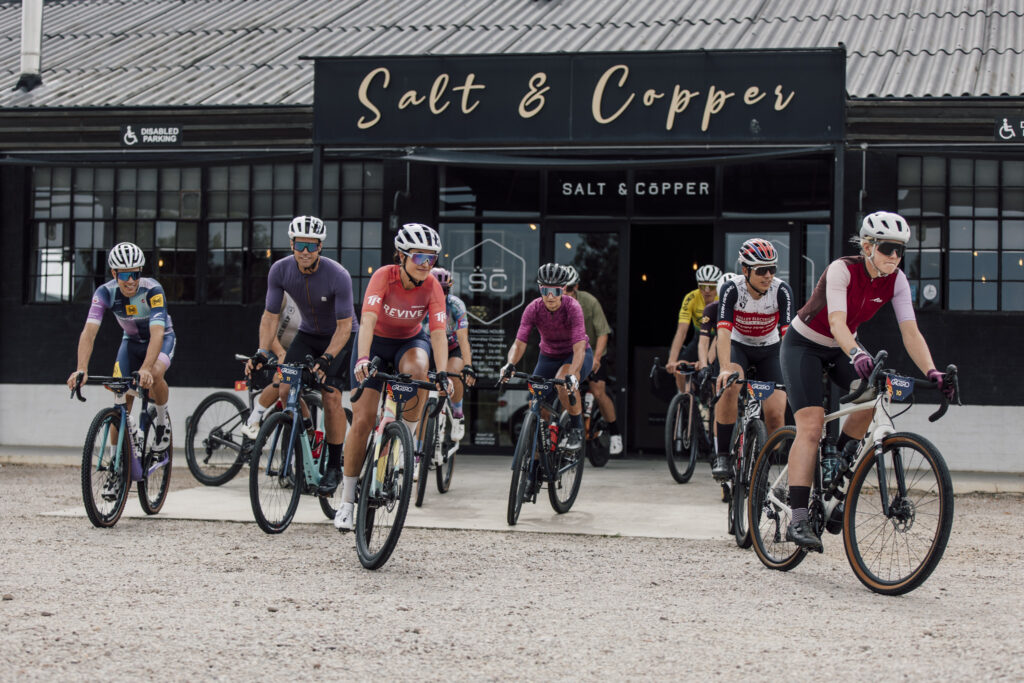
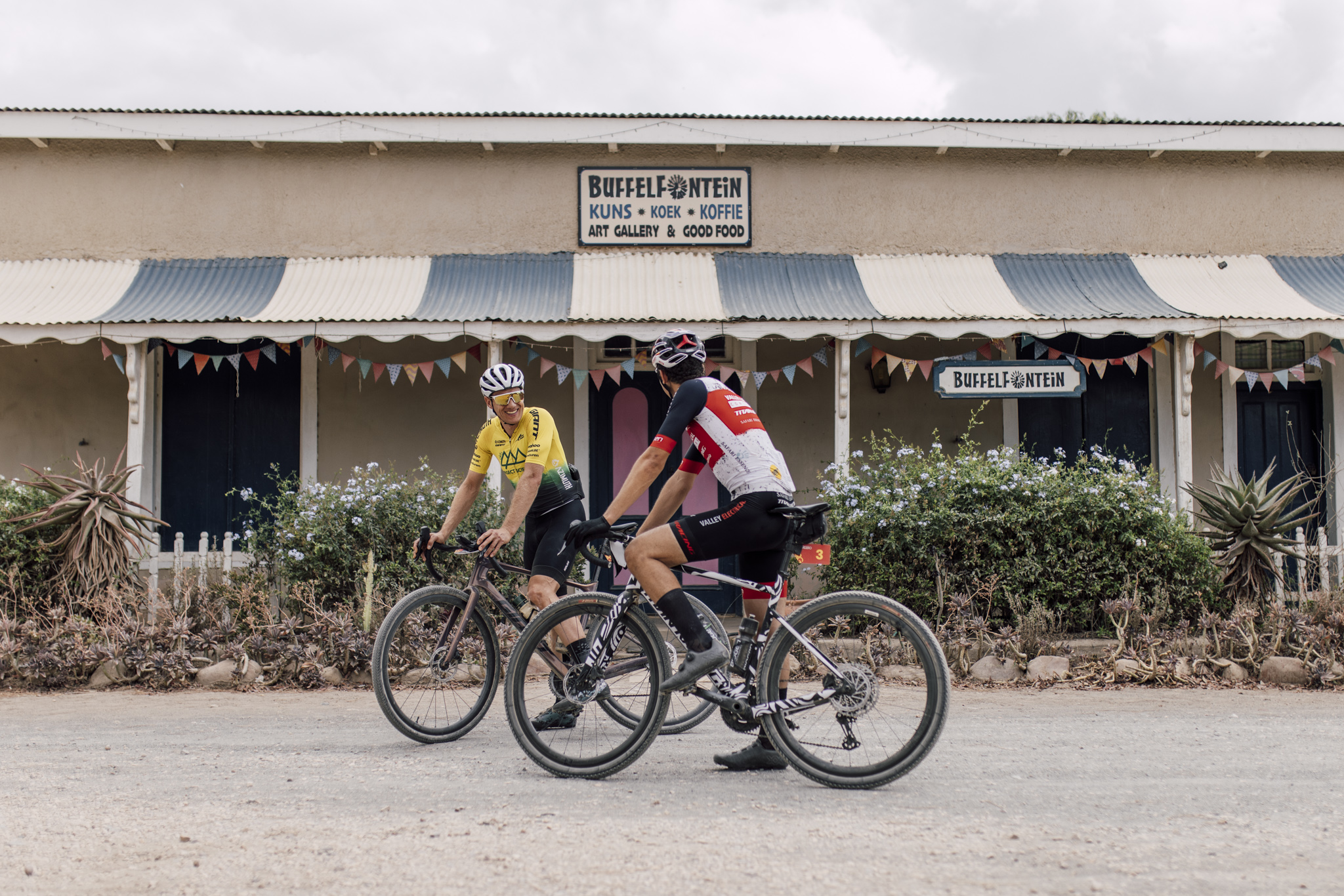
Instead of the traditional isolated race village, cut off from towns, people and place, the Giro is anchoring its race villages in real Karoo towns. Living, breathing communities. Places with history in their dust, stories in their streets, and locals who know exactly how hard the wind blows when it turns.
This is not a logistical shortcut. It’s a philosophical shift.
Racing through a place, not just across it
The Karoo has always demanded respect. It’s vast, honest, and unbothered by ego. Gravel riding belongs here, not because it’s trendy, but because it’s truthful. Long roads. Big skies. Time to think.
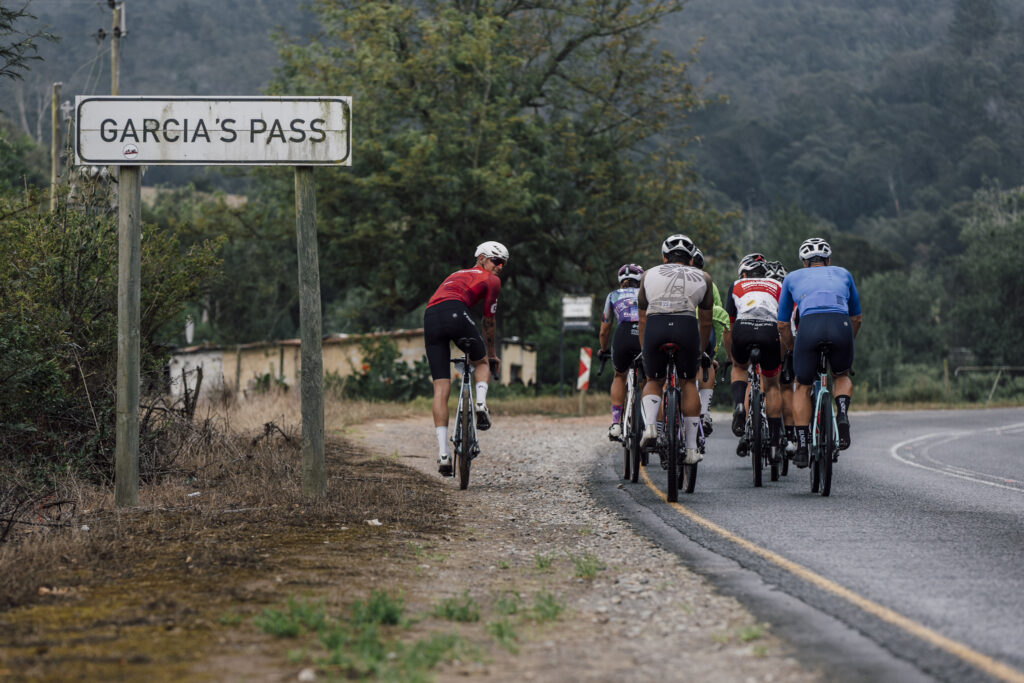
By choosing small Karoo towns as race hubs, the Garden Route Giro is inviting riders to experience the region as more than a backdrop. You don’t just pass through at speed; you arrive. You stay. You wake up inside the landscape rather than on its edge.
Instead of riding into a sealed-off compound, riders roll into a village where cafés are open, shop doors creak, and locals want to know where you’ve come from and where you’re riding tomorrow.
That changes everything.
Build your own adventure
One of the quiet revolutions of this concept is choice.
Traditional tented villages are efficient, but prescriptive. Everyone sleeps the same, eats the same, socialises in the same spaces. The Garden Route Giro flips that script. By using established towns as hubs, riders are encouraged to build their own experience.
Maybe that’s a guesthouse run by a family who’s lived there for generations. Maybe it’s a small hotel with stoep conversations that last long into the evening. Maybe it’s finding a local restaurant and ordering something that isn’t labelled “recovery meal,” but tastes like the Karoo itself.
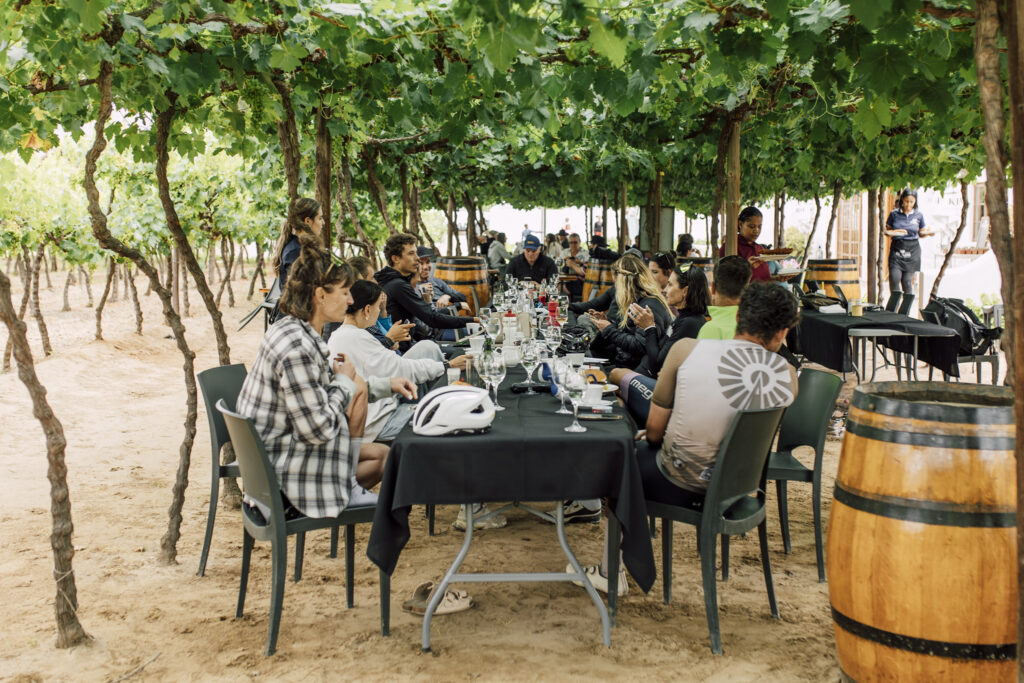
You choose your comfort level. You choose your quiet or your community. You choose how deeply you want to plug into the place.
For amateur cyclists, especially those entering their first stage race, that autonomy is powerful. It turns a daunting event into an inviting journey.
A deeper kind of recovery
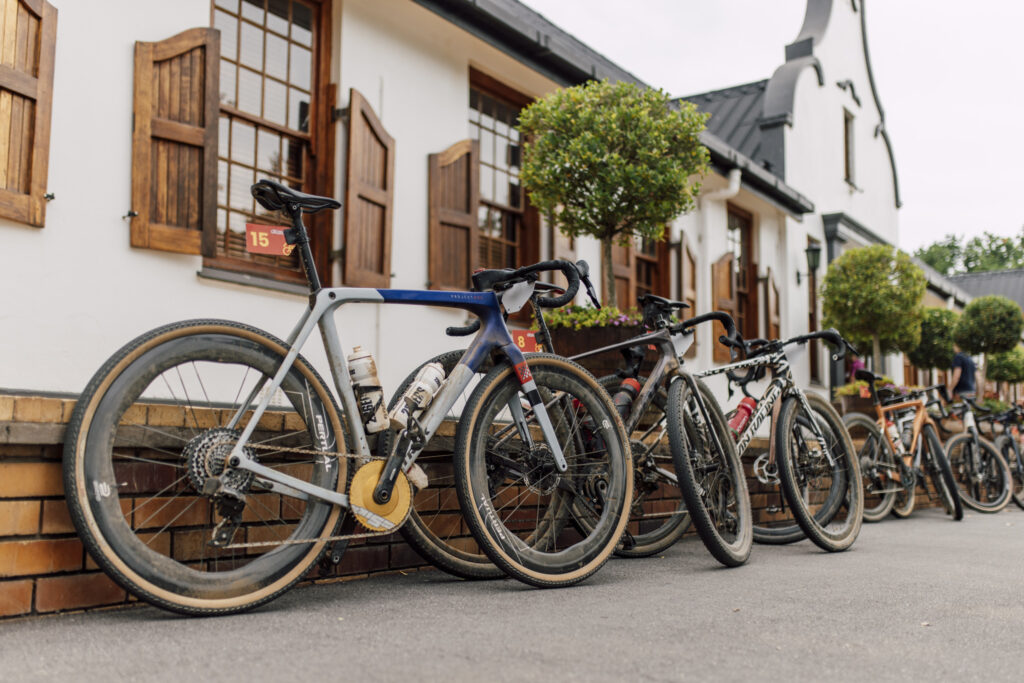
Recovery isn’t only about massage guns and ice baths. It’s also about nervous systems, perspective, and sleep that comes from feeling grounded.
There’s something inherently calming about real towns. Solid walls. Proper beds. Showers that don’t depend on generators. Silence that arrives naturally, not because lights are switched off.
Riders aren’t herded into uniform routines. Instead, they decompress naturally, walking to dinner, chatting to locals, feeling human again after a long day in the saddle.
That kind of recovery doesn’t just feel good; it carries into the riding.
Supporting the soul of the Karoo
There’s another layer to this decision, and it matters.
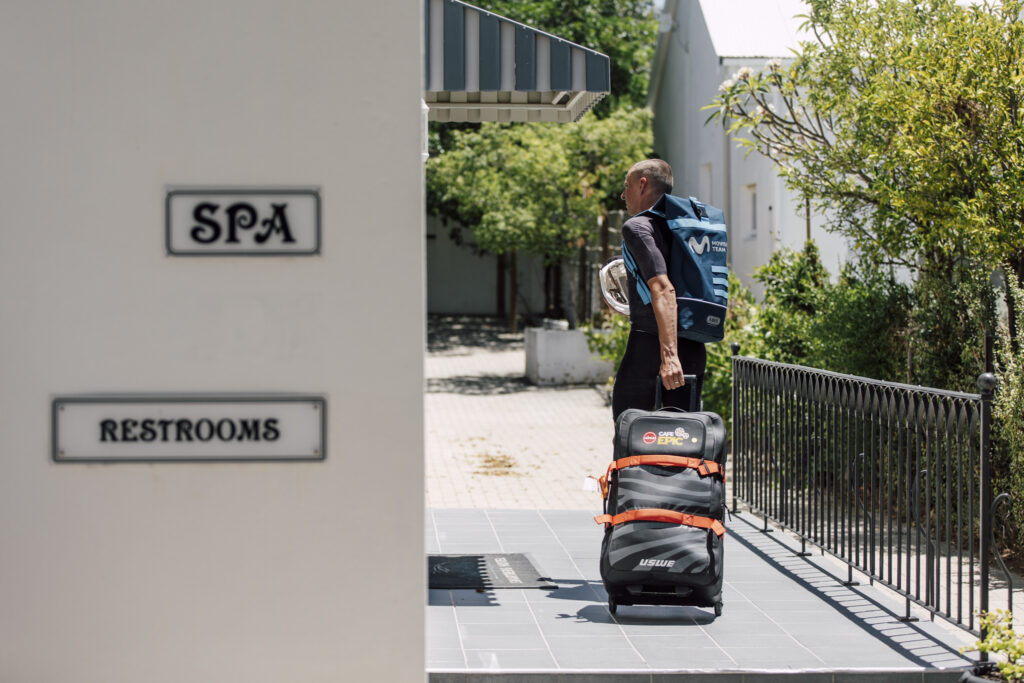
By placing race villages inside Karoo towns, the Garden Route Giro is investing directly into local economies. Guesthouses, cafés, shops, fuel stations, bakeries,everyone benefits. The race becomes something with the community, not something imposed upon it.
For riders, that creates a different energy. You’re not consuming an experience built overnight; you’re participating in something that leaves value behind.
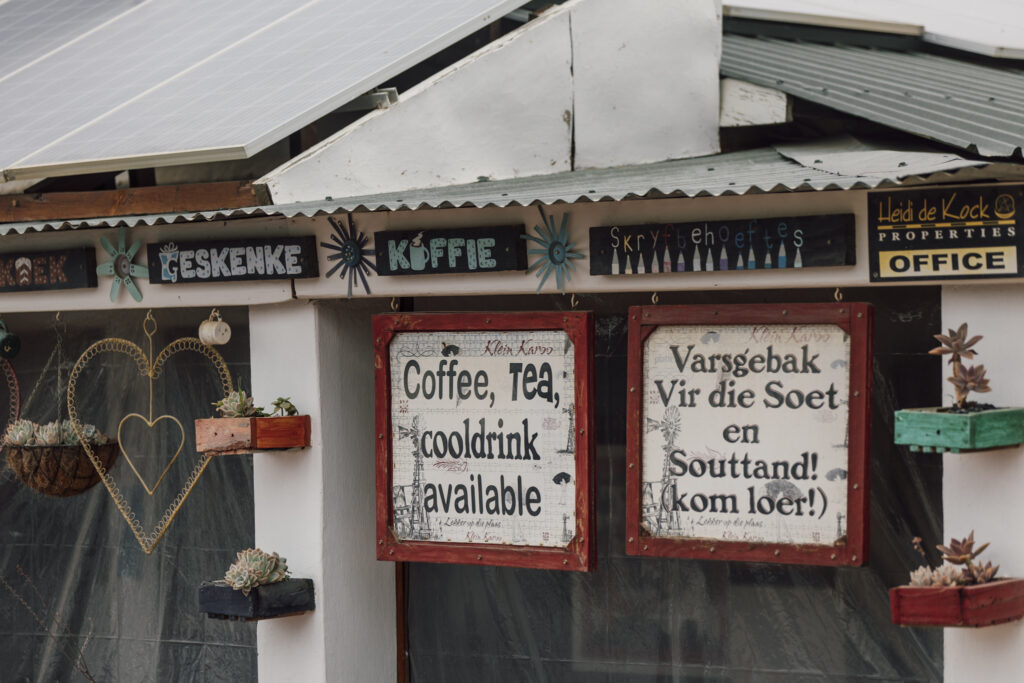
You remember the woman who poured your coffee. The kid who asked about your bike. The shop owner who stayed open late because “the cyclists are in town.”
Those memories last far longer than branded tents ever will.
Gravel racing, grown up
This concept feels like gravel racing coming into its maturity.
It recognises that many riders aren’t chasing podiums they’re chasing meaning. They want challenge, yes. But they also want stories. Connection. A sense that the time, money and energy they invest in a race gives something back to them and to the place.
The Garden Route Giro’s Karoo village approach understands that modern cyclists want immersion, not isolation. Authenticity, not convenience alone.
It’s brave, because it’s harder to manage. It’s slower, because it asks riders to look around. And it’s richer, because of exactly that.
Why this will draw riders in
Cyclists talk. And what they remember isn’t always the elevation profile, it’s the feeling.
The Garden Route Giro is offering a race where the villages matter as much as the stages. Where the finish line is the start of an evening worth remembering. Where you don’t just ride through the Karoo—you live in it, briefly, honestly, and fully.
For riders on the fence, this is the difference. Not just another stage race. Not just another set of tents.
But a journey stitched together by roads, people, and places that will stay with you long after the legs have forgotten the pain.
And that is exactly the kind of race worth entering.
ENTER NOW https://www.gardenroutegiro.co.za/